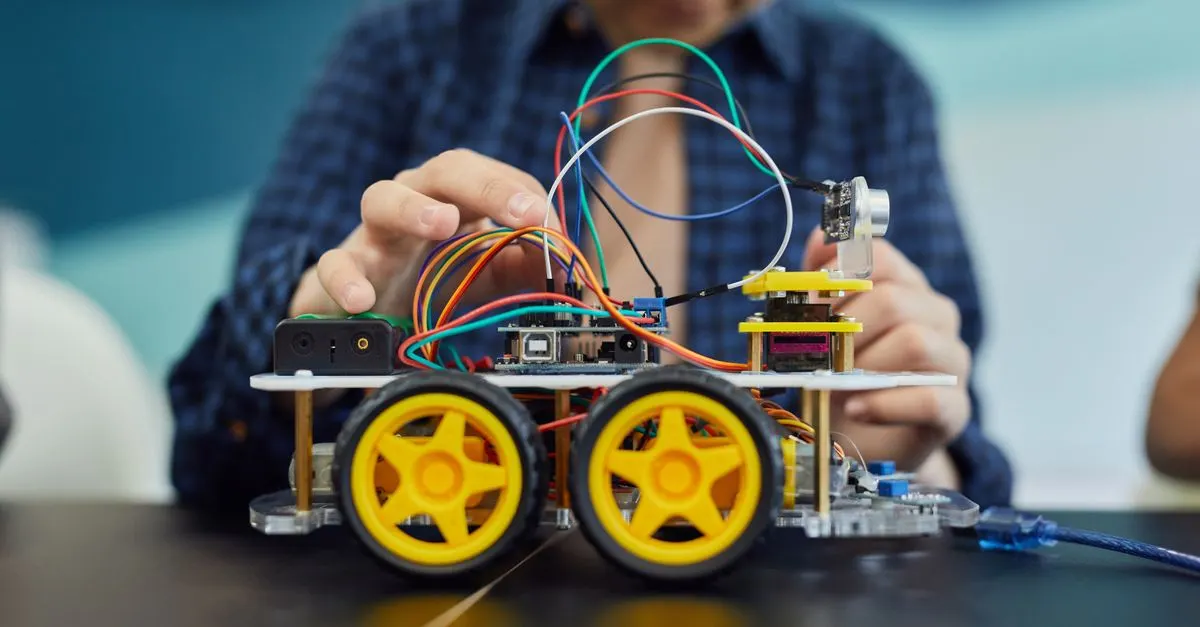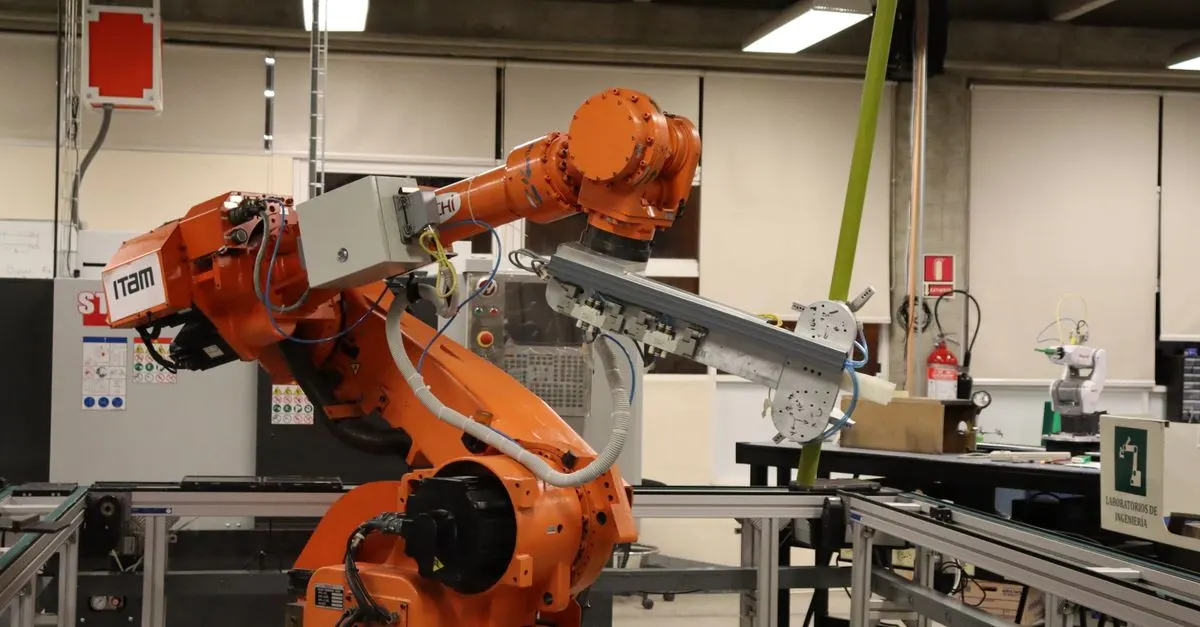
A team of researchers has developed a new method to evaluate robotic foundation models before deploying them in real-world tasks, addressing a major bottleneck in embodied AI development. According to arXiv, the approach uses a metric called Sensorimotor Alignment to predict how well a robot model will perform without the expensive process of running actual closed-loop tests.
The challenge of assessing robotic models has long hindered development in the field. Current evaluation methods require costly physical rollouts where robots attempt tasks in controlled environments. This expense creates friction in the iterative process of improving embodied AI systems, as researchers must decide which candidate models warrant the investment in live testing.
Building on Convergence Theory
The new work extends the Platonic Representation Hypothesis, a framework suggesting that as AI systems improve, different data modalities like vision and language converge toward a unified statistical understanding of reality. The researchers asked whether motion trajectories represent another layer of this convergence: as embodied models mature, do their sensory representations begin to mirror the underlying structure of physical movement?
To test this theory, the team created S-squared (S^2), a metric requiring no training or fine-tuning. The measure quantifies how closely a model's learned sensory representations align with the geometric properties of actual motion patterns. By analyzing this alignment offline, researchers can estimate model capability before deployment.
Strong Correlation with Real Performance
Testing across different embodied model families revealed a consistent positive correlation between S-squared scores and downstream success in robotic tasks. The metric also proved valuable for identifying promising vision-language model backbones before investing in expensive conversion to vision-language-action models, the specialized architectures used for robot control.
Beyond simple correlation, S-squared offers deeper insights into how embodied models function. The metric provides representation-level explanations for observed behaviors in both vision-language-action models and world action models, which predict future states by simulating physical dynamics. This interpretability aspect distinguishes the approach from purely predictive benchmarks.
Implications for Model Development
The work suggests that Sensorimotor Alignment captures something fundamental about embodied AI capability that transcends specific architectural choices or training approaches. By making this alignment empirically measurable, researchers gain a low-cost screening tool for prioritizing which models deserve expensive closed-loop evaluation.
- Eliminates costly physical testing in early evaluation phases
- Works across different model families and architectures
- Identifies promising vision-language backbones pre-fine-tuning
- Provides representation-level explanations for model behavior
For the robotics AI community, this represents a practical acceleration mechanism in the development cycle. As embodied models grow more complex and computationally demanding, efficient offline evaluation becomes increasingly valuable. The metric's generality across model types suggests it could become a standard screening step in robotics research workflows.
The research ultimately positions Sensorimotor Alignment as an empirical bridge between representation theory and practical robotics, offering both theoretical insight and engineering utility for teams developing the next generation of embodied AI systems.