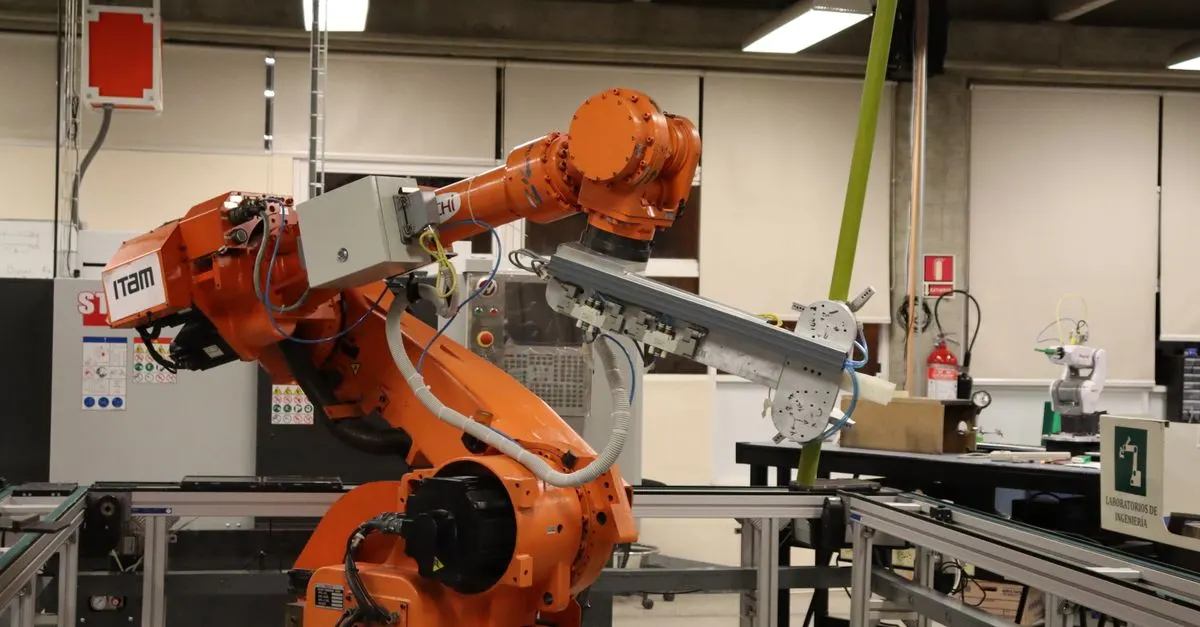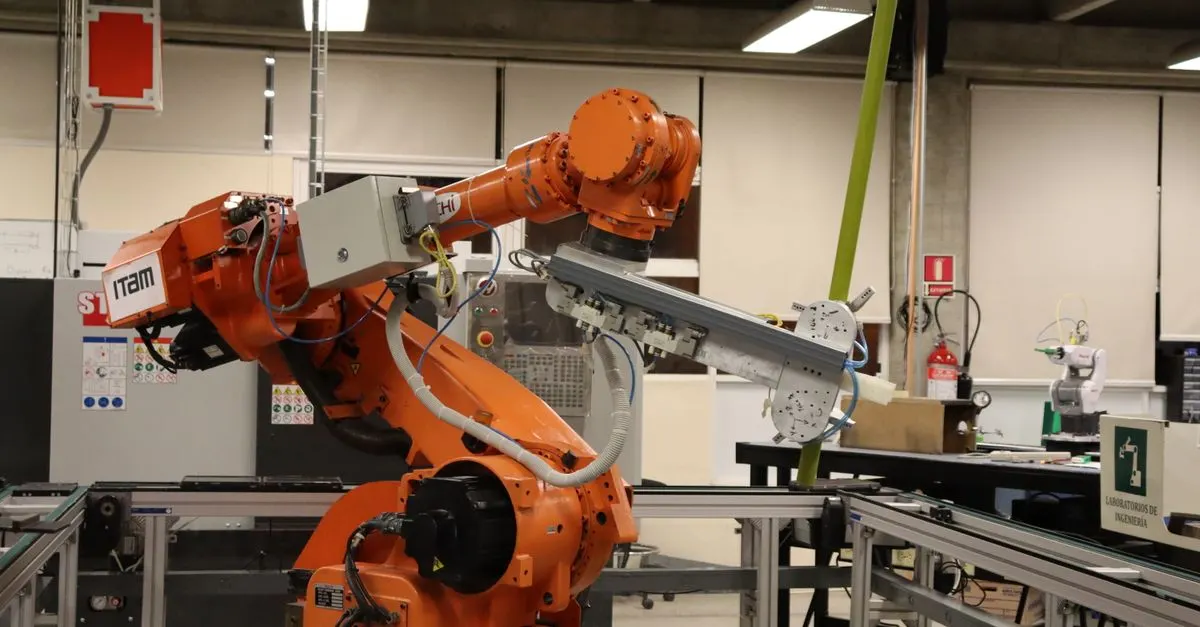
Federal Communications Commission restrictions on imported humanoid and mobile robots are prompting a broader examination of how the United States approaches robotics policy, even as artificial intelligence continues to transform warehouse automation capabilities.
The regulatory action reflects growing governmental interest in controlling the flow of advanced robotics hardware into American supply chains. According to The Robot Report, industry leaders are now weighing the implications of these import constraints alongside accelerating advances in machine learning systems designed to control robotic arms and mobile platforms.
From Rigid Systems to Adaptive AI
Warehouse robotics has undergone significant evolution over the past decade. Early systems relied on narrow perception capabilities and task-specific programming, limiting their flexibility when faced with variable real-world conditions. Contemporary approaches increasingly emphasize hardware-agnostic software layers that can operate across different robotic platforms, allowing operators to deploy proven algorithms without vendor lock-in.
This shift reflects a maturation in how industrial automation specialists think about the relationship between hardware and intelligent control systems. Rather than designing robots as monolithic solutions to specific problems, companies now develop modular AI software that learns continuously from deployment experience. This approach enables faster scaling across different warehouse environments and operational requirements.
Why Proven Performance Matters More Than Demonstrations
The gap between laboratory demonstrations and field deployment remains one of the most persistent challenges in industrial robotics. Flashy proof-of-concept systems often fail to maintain performance when exposed to the messy reality of actual warehouses, where lighting varies, products arrive in unexpected configurations, and systems must operate reliably for months without interruption.
Modern AI-driven automation prioritizes continuous monitoring and adaptation. Rather than attempting to handle every possible variation through explicit programming, contemporary systems learn from anomalies encountered during real operations. This data-driven approach requires robust safety mechanisms and redundancy, since the costs of failure in high-volume environments can quickly mount.
Balancing Conflicting Priorities
The most significant breakthroughs in warehouse robotics depend on navigating inherent tensions between specificity, reliability, and safety. Highly specialized systems achieve superior performance in narrow domains but struggle when conditions shift. Overly generalized approaches sacrifice efficiency for adaptability. Meanwhile, all industrial automation must meet stringent safety standards that prevent harm to human workers and protect valuable inventory.
- Hardware-agnostic software architectures reduce dependence on specific vendors
- Continuous learning systems improve performance based on real-world operational data
- Comprehensive monitoring enables rapid detection and correction of failures
- Safety validation requires extensive field testing, not just simulation
Policy Implications Ahead
As regulators impose new constraints on robot imports, the industry faces pressure to develop and manufacture advanced systems domestically while maintaining competitive performance. This may accelerate investment in AI perception and control software, potentially positioning machine learning innovation as a key competitive advantage for U.S. companies.
The FCC ruling underscores how technology policy decisions increasingly intersect with industrial automation and artificial intelligence development. The coming months will reveal whether these restrictions ultimately strengthen domestic robotics capability or create bottlenecks that slow deployment of warehouse automation solutions.