
New AI Model Fuses Vision, Audio, and Language to Map Physical Scenes
Researchers tackle a fundamental problem in multimodal AI: understanding not just what objects are present, but precisely where they exist in 3D space.
Papers, breakthroughs, benchmarks, and the long-arc trends shaping artificial intelligence. arXiv highlights and lab announcements, distilled.
Researchers tackle a fundamental problem in multimodal AI: understanding not just what objects are present, but precisely where they exist in 3D space.

Researchers argue that measuring success rates alone ignores the real-world operational costs that determine whether security AI systems are actually useful.

New study reveals that language models absorb malicious content injected through public discussion sites, raising security concerns for AI development.

New fusion framework combines motion tracking with vision models to improve myocardial infarction localization from echocardiography, addressing a major clinical bottleneck.

New research reveals that LLMs violate fundamental probability rules when breaking down complex problems into simpler parts.
Researchers decouple memory updates from rendering to achieve streaming video reconstruction without sacrificing speed or stability.

Researchers develop an automated approach to figure editing that understands natural language instructions and learns from how scientists actually revise their work.

Researchers develop MeanFlowNFT to optimize rapid generative AI systems without sacrificing quality or speed.

A new training method lets robot foundation models learn from extended visual histories, achieving 87% performance gains on physical manipulation tasks.
Hierarchical denoising approach balances reasoning capability with real-time inference speed for complex visual problem-solving.

New mathematical framework could dramatically speed up Bayesian inference methods used across machine learning.
Researchers demonstrate multi-agent framework that tracks camera movement and builds 3D maps from standard smartphone footage.

Researchers show that incorporating location and temporal data alongside audio analysis produces more robust models for wildlife monitoring.
New framework treats video generation models as game engines, addressing critical gaps in real-time interactivity and persistent state management.

Researchers propose optimal transport method for independent component analysis, eliminating restrictive distributional assumptions.
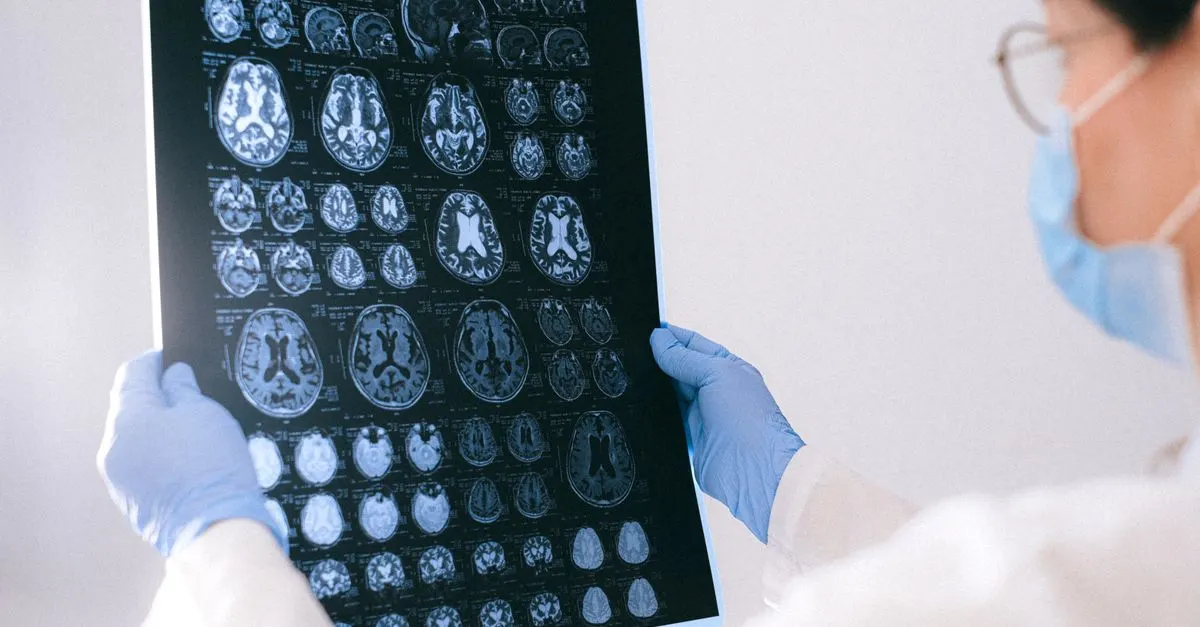
New training method combines supervised and self-supervised learning to improve brain signal interpretation with minimal labeled data.
The AI research giants outline a coordinated strategy to build artificial intelligence systems capable of withstanding real-world biological challenges.

New system shows LLMs can reformulate entire documents for target languages, moving past the sentence-by-sentence translation bottleneck.