
LLMs Transform Medical Education Into Interactive Clinical Games
Researchers use AI to convert static case studies into adaptive learning scenarios that boost student engagement and knowledge retention.
Papers, breakthroughs, benchmarks, and the long-arc trends shaping artificial intelligence. arXiv highlights and lab announcements, distilled.
Researchers use AI to convert static case studies into adaptive learning scenarios that boost student engagement and knowledge retention.

Researchers introduce a diffusion model that maintains consistent world states across multiple agents and camera angles simultaneously.
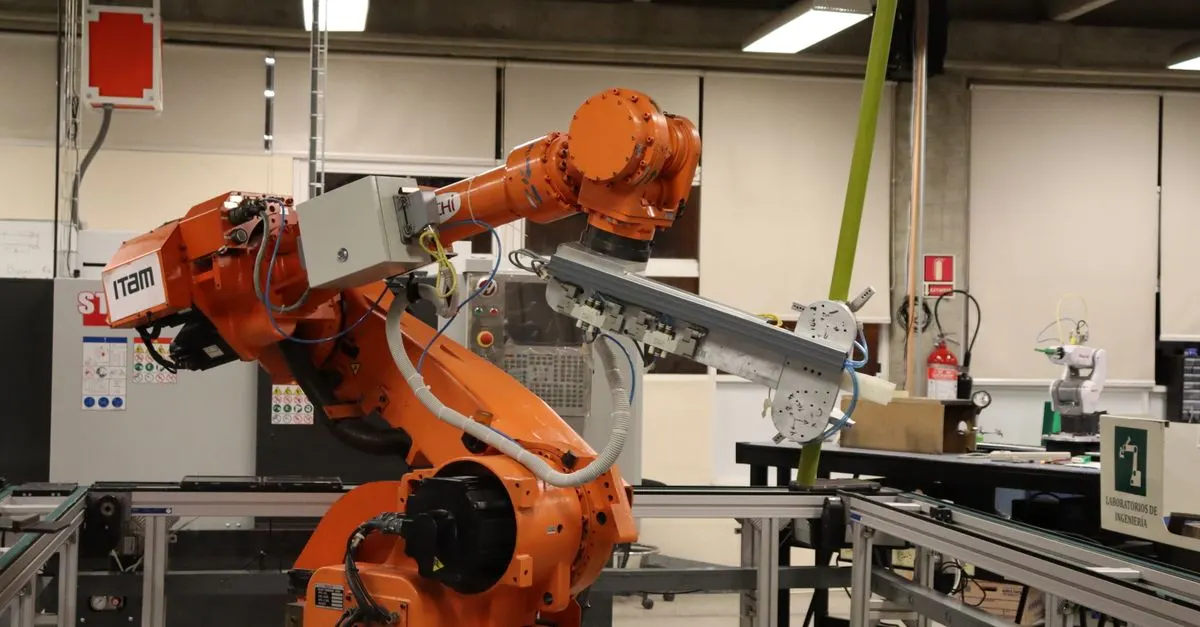
New diagnostic framework reveals which semantic components robots struggle to learn, enabling more efficient training with half the data.
New framework injects spatial reasoning into VLMs using implicit and explicit geometry learned from video, without requiring 3D training data.
Researchers find that large language models improve problem-solving by extracting and reusing lessons from their own solution attempts.

Researchers release 343,000 annotated text images to accelerate document digitization for 110 million Persian speakers.

Researchers introduce a two-stage training approach that forces multimodal models to show their work by identifying objects and events before generating descriptions.

New control system ports advanced teleoperation and AI learning techniques from expensive full-size robots to affordable miniature platforms.

Researchers eliminate a fundamental bottleneck preventing neural networks from seamlessly combining image understanding with symbolic deduction.

New dataset and benchmark address how AI systems perpetuate Western cultural biases in non-English speaking regions.

Researchers prove convergence guarantees for machine learning functions, resolving critical gaps in how AI systems learn from data.

Researchers introduce adaptive token approach that maintains visual quality while dramatically reducing computational requirements for real-time 3D synthesis.

Researchers develop intelligent routing system that decides when AI models should recover from errors cheaply versus escalating to premium versions.
OmniReasoner teaches language models to zoom in on relevant clips, reducing computational costs while improving accuracy on complex multimodal reasoning tasks.

Researchers introduce ExpertVerse to test whether multimodal AI can handle knowledge-intensive visual tasks across professional domains.

The tech giant backs the Genesis Mission with computational resources to unlock breakthroughs across scientific disciplines.

A new technique lets pre-trained video models serve as robot controllers by treating actions as masked motion patterns, enabling learning from minimal real-world data.

A technical guide to chunking, retrieval, re-ranking, and observability for RAG systems at scale